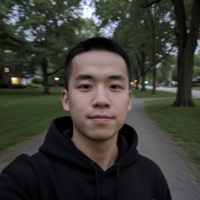
Now, distinguishing AI-generated images from real photos is getting incredibly difficult.
Take a few seconds to examine these four images below. Can you tell which one is AI-generated?
Try to guess before scrolling down for the answer!
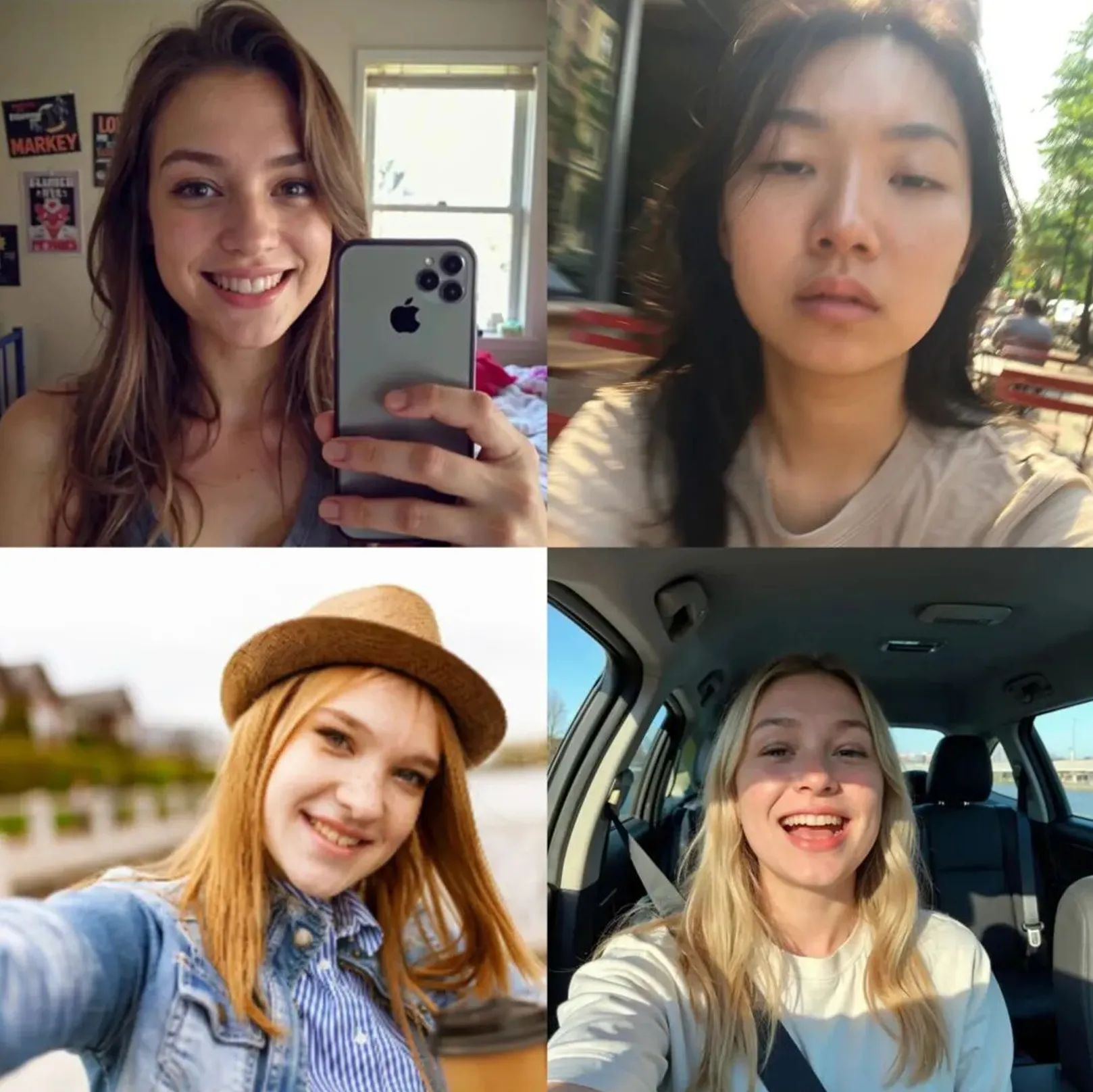
Surprisingly, only the bottom-left image is a real photograph. We don't know if you guessed correctly, but our entire editorial team found this challenge quite difficult.
The reality is undeniable: AI-generated images have become nearly impossible to distinguish from authentic photos, and even many AI detection tools are failing.
The Evolution of AI-Generated Images
Remember the early days? AI-generated images used to be riddled with telltale signs—cartoon-like styles, bizarre limbs and facial features, unrealistic backgrounds, and sometimes even unsettling distortions.
Fast forward to today, and with the upgrades of numerous AI models, the text-to-image capabilities of large language models have reached god-tier levels. For instance, the "selfie" in the top-right corner above was generated using ChatGPT-4o with the following prompt:
An exceedingly [MUNDANE] iPhone selfie, with no clear subject or framing—just a [CASUAL] snapshot. The photo has a slight motion [BLUR] and is a bit [OVEREXPOSED] due to uneven sunlight; the angle is awkward, the composition is poor, and the overall effect is [MUNDANE] to the extreme—as if it were accidentally taken while pulling a phone out of a pocket to snap a selfie. In the photo is a pretty Asian woman in her twenties, sitting in the outdoor seating area of an ordinary restaurant in New York; it's shot naturally in portrait orientation, with an aspect ratio of 9:16.Large language models can now comprehend abstract concepts in prompts like "mundane," "casual," "blur," and "overexposed," generating images that look exactly like spontaneous snapshots from everyday life—with zero sense of artificiality.
How Do They Do It?
While the exact training architecture remains proprietary and hasn't been open-sourced, we found some clues on OpenAI's official website.
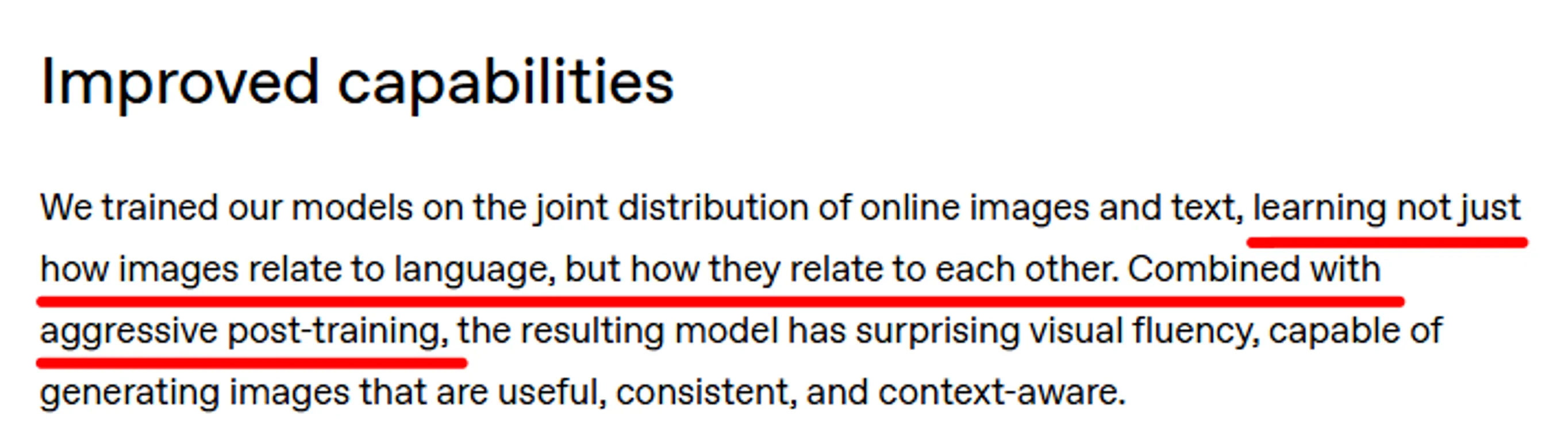
According to OpenAI, their training process enables the model to better understand the correlation between language and images. Combined with mysterious "post-training" techniques, the generated results appear incredibly smooth and natural.
So when we provide abstract terms like "casual" or "mundane," the model understands that the image should have a slightly tilted angle, some blur, natural expressions, and other realistic imperfections—and executes these nuances flawlessly.
Technology is advancing at such a breakneck pace that we carbon-based lifeforms simply can't keep up. But here's the more desperate part: even silicon-based systems can't tell the difference anymore.
Testing AI Against Itself
We first tested whether AI models could identify their own creations. Unsurprisingly, they could easily spot older, obviously fake AI images—just like us humans. But now? When we fed the same image to Doubao (ByteDance's LLM) and ChatGPT, both confidently identified it as a genuine selfie photograph.
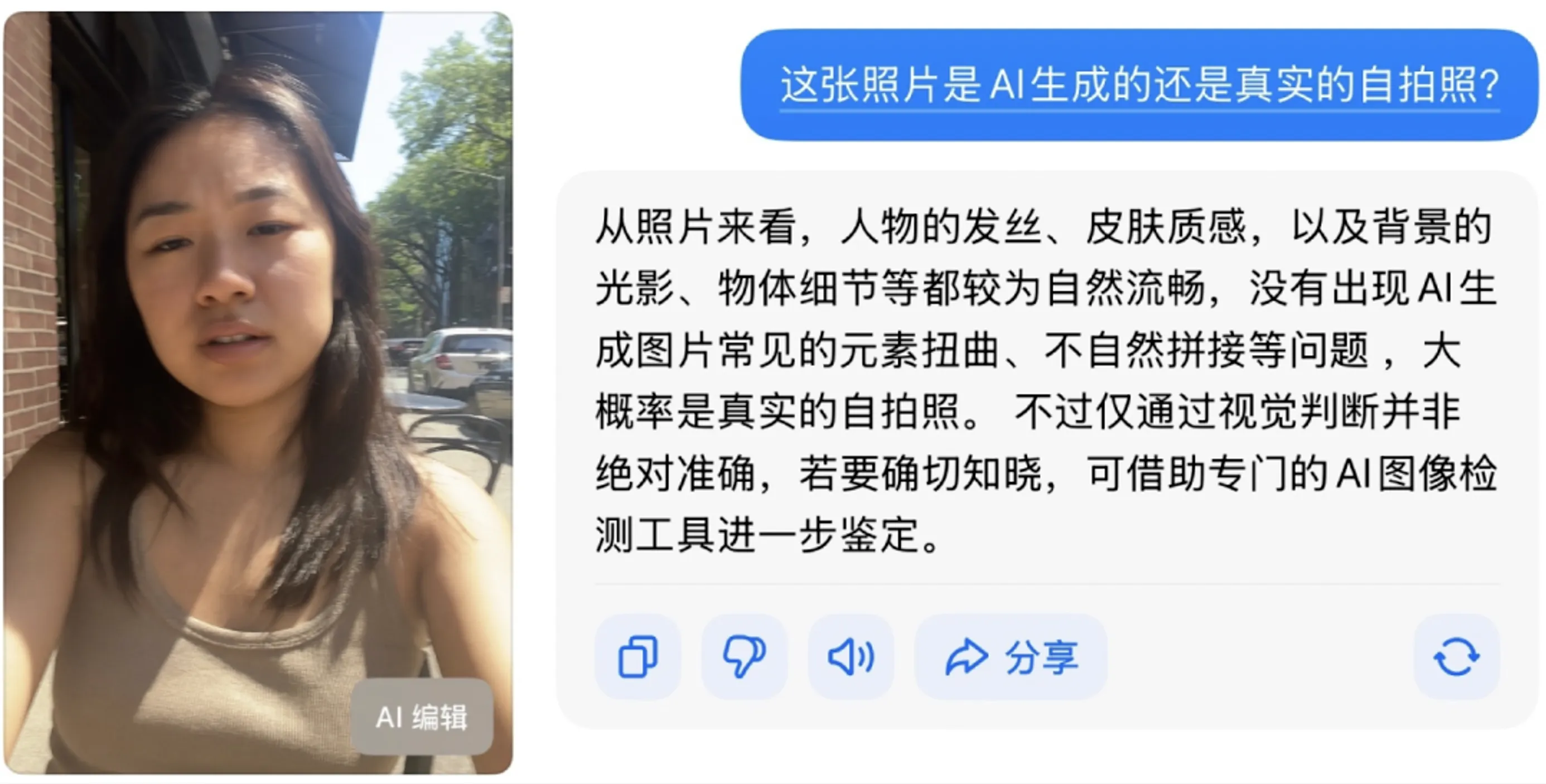 Doubao couldn't detect this AI-generated image
AI Detection Tools Are Failing Too
Beyond testing with large language models, we also tried two of the highest-ranked free AI image detection tools. The results? Each failed spectacularly in its own way.
We tested eight AI-generated portrait images that were completely indistinguishable to the human eye. Out of these eight:
- Four images: Both detectors agreed—but they both incorrectly identified them as real photographs.
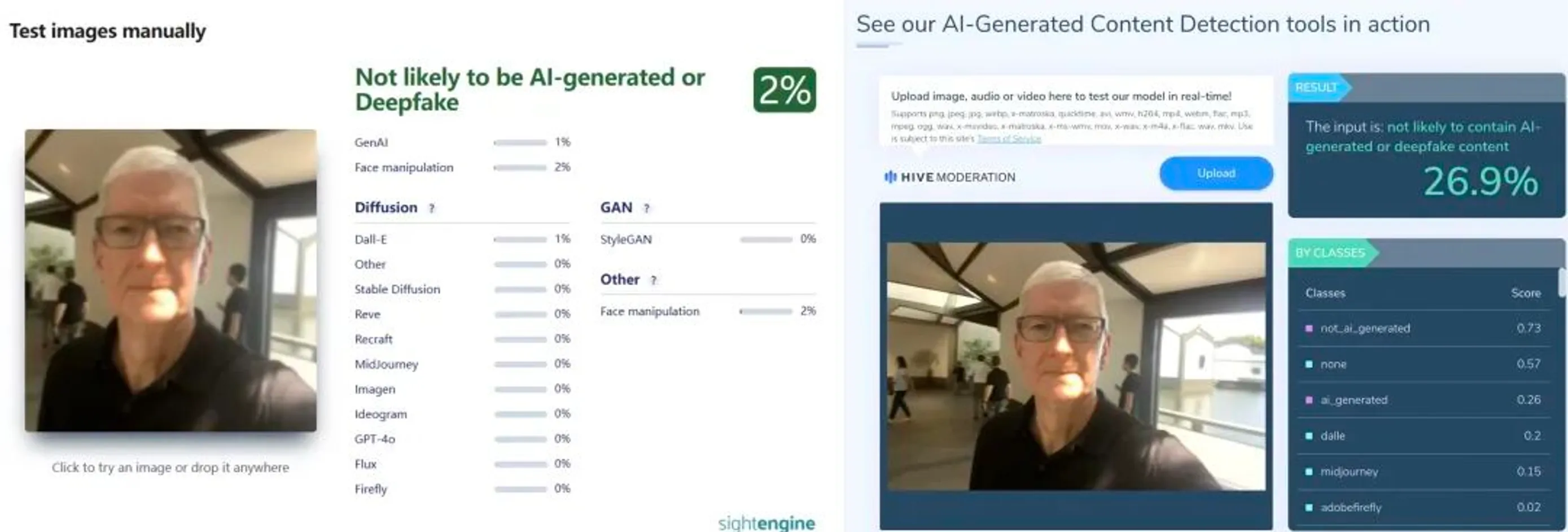
- Four images: The two detectors gave completely opposite verdicts. We initially suspected they were copying each other's homework, but this dispelled that theory—they were making entirely different mistakes.
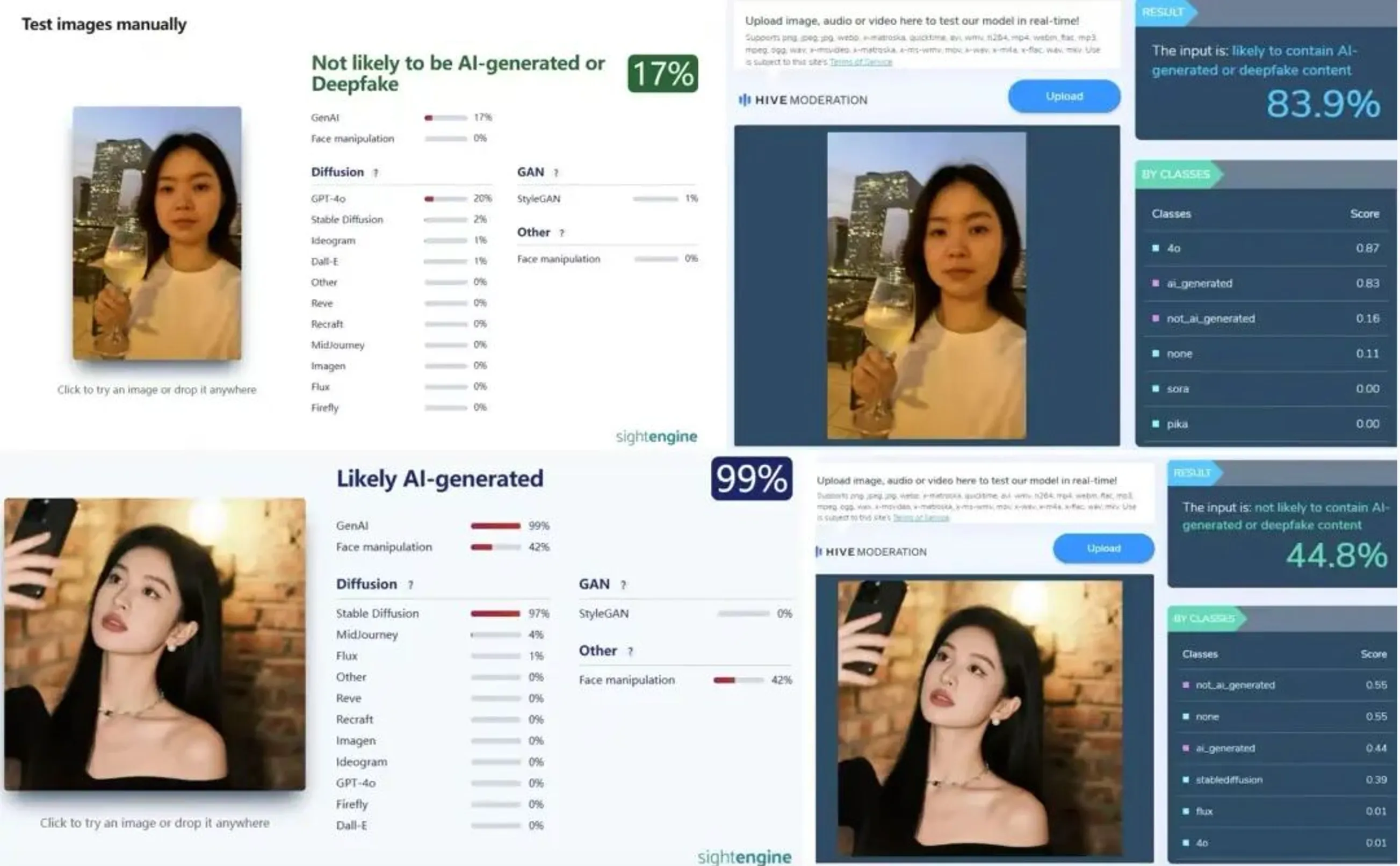 Total disagreement between detectors
And these were just simple portraits with faces centered in the frame and minimal backgrounds.
When we tested more complex scenarios—multiple people, intricate backgrounds, or pure landscape images—the detection tools crashed and burned completely. If the detectors showed some hesitation with AI selfies, they were utterly convinced these complex images were authentic.
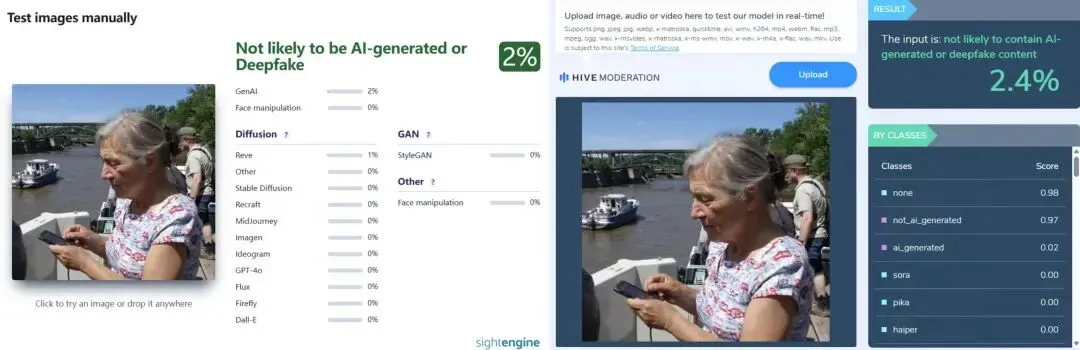
To make matters worse, one detector even falsely flagged a genuine photograph as AI-generated.
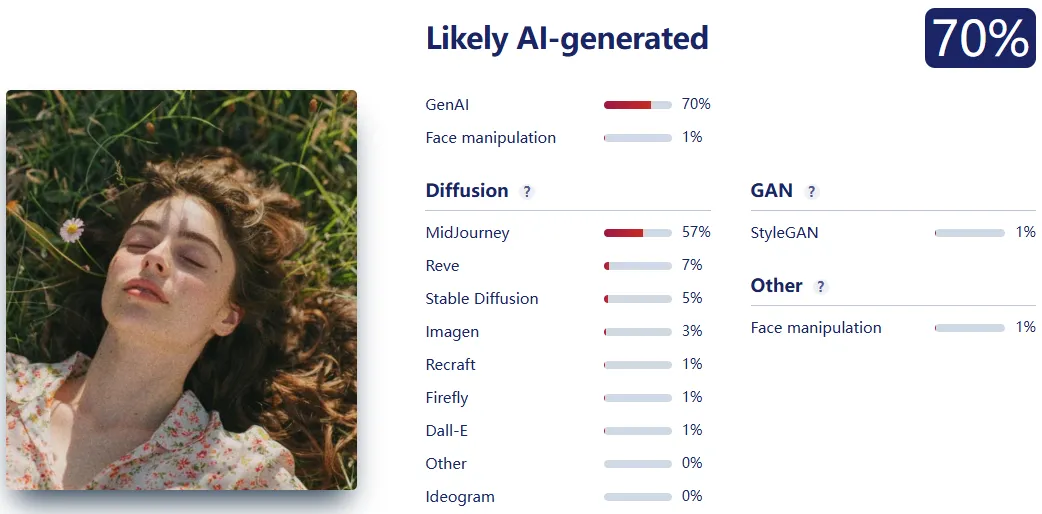
Honestly, this is devastating news for anyone in an online relationship. You genuinely can't tell photos from "photo-frauds" anymore. Photoshop might leave traces, but today's AI image generators create content so realistic that you might wonder if that celebrity or influencer is actually trying to date you.
Why Are Detection Tools Failing?
During our research, we discovered something striking: while text-to-image technology has skyrocketed like a rocket, AI image detection has been stuck riding a bicycle powered by convolutional neural networks for years.
Since most commercial tools don't open-source their code, we examined several AI image detection projects on GitHub for reference.
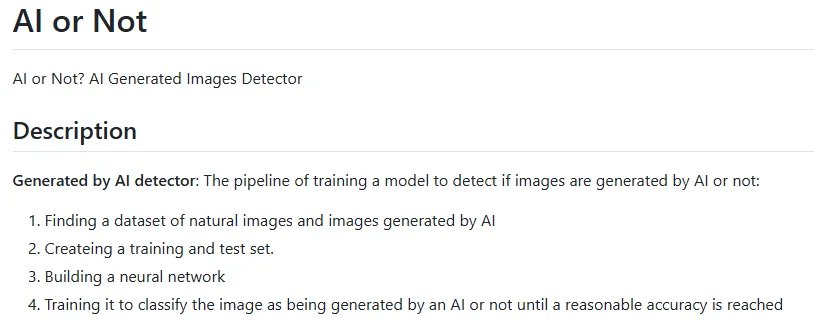
We found that these AI detection tools still rely on the outdated architecture: dataset + convolutional feature recognition + classification.
Those familiar with computer vision will recognize this N-year-old workflow: label each image in the dataset as AI-generated or real, then let the neural network learn the corresponding features and perform classification.
As AI generation technology evolves through iteration after iteration, these detection tools merely add new AI images to old datasets, slap on labels, and retrain the same old models. One tool even uses the CvT-13 model from 4 years ago.
To put it bluntly: the magic is one foot tall, while the defense is only one inch high. Without updating the underlying technology, accuracy will never improve.
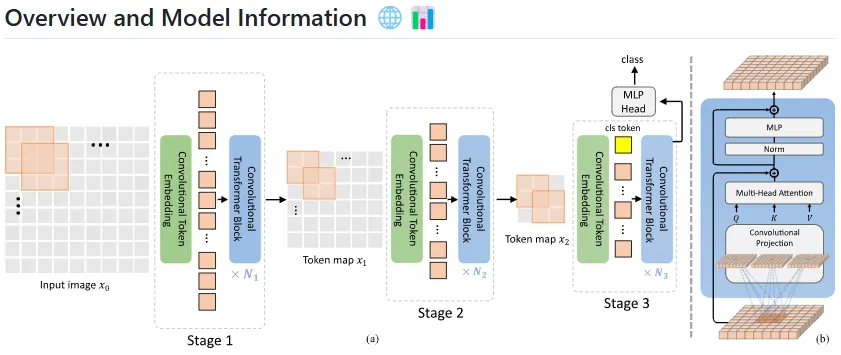 CvT-13 architecture
While there is some academic research on AI image detection, the speed, volume, and attention it receives pale in comparison to large language model text-to-image research.
Solutions: Tackling the Problem at the Source
Rather than spending time and effort identifying AI images after the fact, it's better to solve the problem at the source.
For example, the C2PA organization—jointly supported by major AI companies—is working to establish standards that make it easier to verify information sources and prevent the proliferation of AI-generated content.
- OpenAI has committed to adding watermarks to generated images
- Google has introduced SynthID, which embeds digital watermarks into AI-generated text, images, videos, and audio—invisible to human perception but detectable by software
Why Does It Matter?
You might wonder: why do we need to distinguish AI images at all? Isn't it a good thing that the technology is so advanced?
Yes, image generation is impressive. But there are two sides to every coin. While AI-generated images amaze the world, news of AI-powered fraud and scams continues to flood in. The more realistic AI becomes, the higher our chances of being deceived.
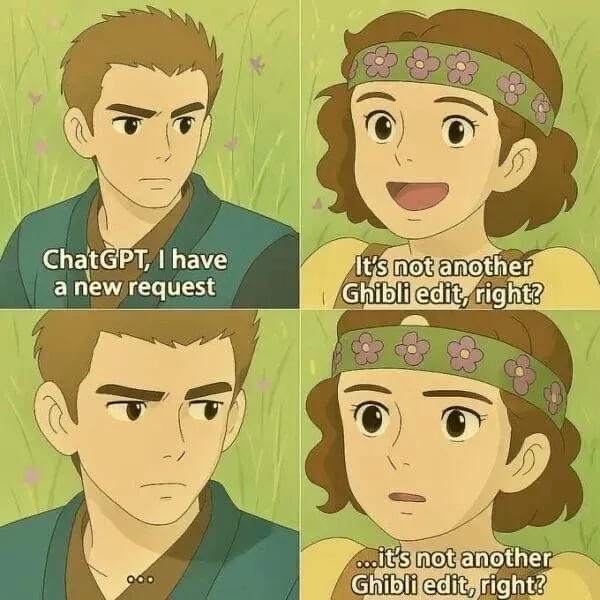
After all, some people aren't thinking about how to create cute Ghibli-style images with AI tools like Oh My Images—they're focused on using the most realistic images to exploit our most vulnerable weaknesses.
The Bottom Line
Right now, it's nearly impossible for humans to distinguish AI images from real photos on our own.
Both detection tools and source-based labeling technologies are lagging behind current needs, yet the demand is urgent.
This suggests that distinguishing AI content will be a prolonged battle. As major companies flex their muscles with cutting-edge image generation technology, they should also consider upgrading AI detection capabilities.
Technology must advance responsibly—and that means keeping pace on both offense and defense.
Want to experience state-of-the-art AI image generation yourself? Try Oh My Images with multiple AI models including ChatGPT-4o, Nano Banana Pro, and Seedream 4.5.